文章目录
- 用于创建一个容量为 size 的协程池。默认情况下,协程池不会自动扩容,因此超出容量限制的任务会等待空闲 worker。 import “github.com/panjf2000/ants/v2” var pool *ants.Pool func init() { var err error pool, err = ants.NewPool(10) // 创建容量为10的协程池 if err != nil { log.Fatalf(“Failed to create goroutine pool: %v”, err) } } NewPool() 返回的是一个可复用的固定容量协程池,内部通过任务队列与 worker 协同处理。
- 协程池的核心方法 // Submit submits a task to the pool. // // Note that you are allowed to call Pool.Submit() from the current Pool.Submit(), // but what calls for special attention is that you will get blocked with the last // Pool.Submit() call once the current Pool runs out of its capacity, and to avoid this, // you should instantiate a Pool with ants.WithNonblocking(true). func (p *Pool) Submit(task func()) error 使用 Submit() 提交一个函数类型任务给协程池异步执行 示例 : err := pool.Submit(func() { fmt.Println(“Task executed by goroutine:”, runtime.NumGoroutine()) }) if err != nil { log.Println(“Failed to submit task:”, err) } 每次调用 Submit() 不会阻塞主线程。 如果当前运行的 goroutine 已达到上限,任务将等待空闲 worker。
- 释放协程池资源,释放后协程池不再接受新的任务提交。 pool.Release() ⚠️ 注意:一旦调用 Release(),协程池将被永久关闭,不能再次使用。再次提交任务将 panic。
- 适合用于实时监控协程池负载状态。 fmt.Printf(“Running goroutines: %dn”, pool.Running()) 适合用于实时监控协程池负载状态。
- 获取池容量 Cap()返回协程池的最大容量(即最大 goroutine 数量)。可用于与 Running() 搭配分析使用率。 fmt.Printf(“Pool capacity: %dn”, pool.Cap()) 动态调整容量 Tune(newSize int)在运行时动态调整协程池容量,适应系统负载变化。 pool.Tune(20) // 将容量调整为20 扩容会立即生效。 缩容后,多余的 worker 会在任务完成后自动回收。 Tune() 不会中断正在执行的任务。
- 2.1.1 goWorker type goWorker struct { pool *Pool task chan func() recycleTime time.Time } goWorker 就是我们协程池里的实例 , 简单理解为一个长时间运行而不回收的协程,用于反复处理用户提交的异步任务 pool:goWorker 所属的协程池; task:goWorker 用于接收异步任务包的管道; recycleTime:goWorker 回收到协程池的时间.
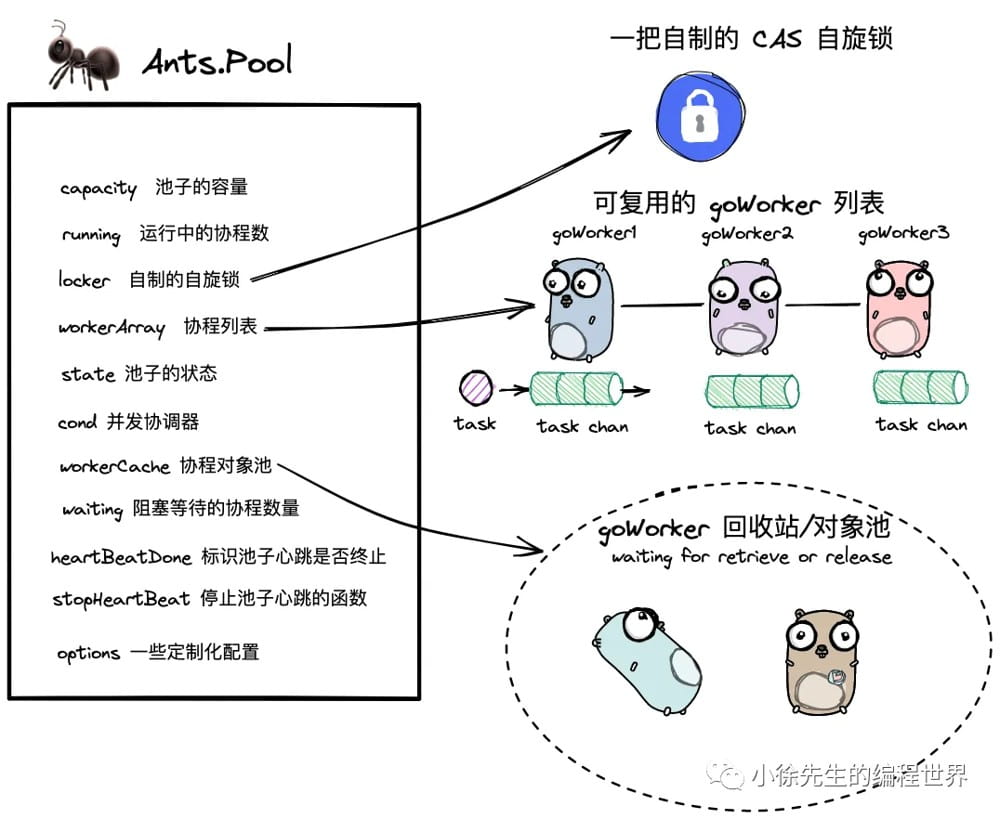
- type Pool struct { capacity int32 running int32 lock sync.Locker workers workerArray state int32 cond *sync.Cond workerCache sync.Pool waiting int32 heartbeatDone int32 stopHeartbeat context.CancelFunc options *Options } capacity:池子的容量 running:出于运行中的协程数量 lock:自制的自旋锁,保证取 goWorker 时并发安全 workers:goWorker 列表,即“真正意义上的协程池” state:池子状态标识,0-打开;1-关闭 cond:并发协调器,用于阻塞模式下,挂起和唤醒等待资源的协程 waiting:标识出于等待状态的协程数量; heartbeatDone:标识回收协程是否关闭; stopHeartbeat:用于关闭回收协程的控制器函数; options:一些定制化的配置. workerCache:存放 goWorker 的对象池,用于缓存释放的 goworker 资源用于复用. 对象池需要区别于协程池,协程池中的goWorker 仍存活,进入对象池的 goWorker 逻辑意义已经销毁; 2.1.3 workerArray type workerArray interface { len() int isEmpty() bool insert(worker *goWorker) error detach() *goWorker retrieveExpiry(duration time.Duration) []*goWorker reset() } 该 interface 主要定义了作为数据集合的几个通用 api,以及用于回收过期 goWorker 的 api. insert 插入一个 goWorker detach 取出一个 goWorker retrieveExpiry 获取池中空闲时间超过 duration 的 已经过期的 goWorker 集合 ,其中 goWorker 的回收时间与入栈先后顺序相关,因此可以借助 binarySearch 方法基于二分法快速获取到目标集合.
- 2.2.1 NewPool 创建协程池 func NewPool(size int, options …Option) (*Pool, error) { // 读取用户配置,做一些前置校验,默认值赋值等前处理动作… opts := loadOptions(options…) // 构造好 Pool 数据结构; p := &Pool{ capacity: int32(size), lock: internal.NewSpinLock(), options: opts, } // 构造对象池 p.workerCache.New = func() interface{} { return &goWorker{ pool: p, task: make(chan func(), workerChanCap), } } // 构造好 goWorker 对象池 workerCache,声明好工厂函数; p.workers = newWorkerArray(stackType, 0) // golang 标准库提供的并发协调器,用于实现指定条件下阻塞和唤醒协程的操作. p.cond = sync.NewCond(p.lock) // 异步启动 goWorker 过期销毁协程. var ctx context.Context ctx, p.stopHeartbeat = context.WithCancel(context.Background()) go p.purgePeriodically(ctx) return p, nil } 2.2.2 pool.Submit 提交任务 func (p *Pool) Submit(task func()) error { // 从 Pool 中取出一个可用的 goWorker; var w *goWorker if w = p.retrieveWorker(); w == nil { return ErrPoolOverload } // 将用户提交的任务包添加到 goWorker 的 channel 中. w.task <- task return nil } 取出goWorker 的实现: func (p *Pool) retrieveWorker() (w *goWorker) { // 声明了一个构造 goWorker 的函数 spawnWorker 用于兜底,从对象池 workerCache 中获取 goWorker; spawnWorker := func() { w = p.workerCache.Get().(*goWorker) w.run() } p.lock.Lock() // 尝试从池中取出一个空闲的 goWorker; w = p.workers.detach() if w != nil { p.lock.Unlock() // 倘若池子容量未超过上限, 从对象池中取出一个 goWorker } else if capacity := p.Cap(); capacity == -1 || capacity > p.Running() { p.lock.Unlock() spawnWorker() } else { // 倘若池子容量超限,且池子为非阻塞模式,直接抛回错误; if p.options.Nonblocking { p.lock.Unlock() return } // 倘若池子容量超限,且池子为阻塞模式,则基于并发协调器 cond 挂起等待有空闲 worker; retry: // 若阻塞任务已达最大限制,也直接返回; if p.options.MaxBlockingTasks != 0 && p.Waiting() >= p.options.MaxBlockingTasks { p.lock.Unlock() return } // 增加等待数并使用 cond 条件变量挂起当前协程; p.addWaiting(1) p.cond.Wait() // block and wait for an available worker p.addWaiting(-1) // 被唤醒后(可能是因为 scavenger 清理协程),判断是否还有运行中的 worker; var nw int if nw = p.Running(); nw == 0 { // awakened by the scavenger p.lock.Unlock() spawnWorker() return } // 再次尝试重新获取一个空闲 worker; if w = p.workers.detach(); w == nil { if nw < p.Cap() { p.lock.Unlock() spawnWorker() return } goto retry } // 获取到了可用 worker,解锁并返回; p.lock.Unlock() } return } 2.2.3 goWorker 运行 func (w *goWorker) run() { w.pool.addRunning(1) go func() { defer func() { w.pool.addRunning(-1) w.pool.workerCache.Put(w) if p := recover(); p != nil { // panic 后处理 } w.pool.cond.Signal() }() for f := range w.task { if f == nil { return } f() if ok := w.pool.revertWorker(w); !ok { return } } }() 循环 + 阻塞等待,直到获取到用户提交的异步任务包 task 并执行; 执行完成 task 后,会将自己交还给协程池; 倘若回归协程池失败,或者用户提交了一个空的任务包,则该 goWorker 会被销毁,销毁方式是将自身放回协程池的对象池 workerCache. 并且会调用协调器 cond 唤醒一个阻塞等待的协程. 到此这篇关于Go语言ants协程池的具体使用的文章就介绍到这了,更多相关Go语言ants协程池内容请搜索风君子博客以前的文章或继续浏览下面的相关文章希望大家以后多多支持风君子博客! 您可能感兴趣的文章: golang中ants协程池使用和实现逻辑
目录
- 1. 使用方法
- 1.1 创建协程池 NewPool(size int)
- 1.2 提交任务 Submit(task func())
- 1.3 释放协程池 Release()
- 1.4 查询当前运行数 Running()
- 1.5 池容量
- 流程
- 2. 底层实现
- 2.1 核心数据结构
- 2.1.2 Pool
- 2.2 核心方法的实现
在 Go 语言中,goroutine 的轻量特性使得高并发编程变得异常简单。然而,随着并发量的增加,频繁创建对象和无限制启动 goroutine 也可能带来内存浪费、GC 压力和资源抢占等问题。为了解决这些隐患,协程池成为常用的优化手段。用于控制并发数量、避免系统过载。本文将简要介绍golang 中大名鼎鼎的 ants 协程池库的实现原理。
ants包仓库 : https://github.com/panjf2000/ants
为什么用协程池?
- 提升性能:主要面向一类场景:大批量轻量级并发任务,任务执行成本与协程创建/销毁成本量级接近;
- 动态调配并发资源 : 能够动态调整所需的协程数量以及各个模块的并发度上限;
- 协程生命周期控制:实时查看当前全局并发的协程数量;有一个统一的紧急入口释放全局协程.
安装ants库
go get -u github.com/panjf2000/ants/v2
用于创建一个容量为 size 的协程池。默认情况下,协程池不会自动扩容,因此超出容量限制的任务会等待空闲 worker。
import "github.com/panjf2000/ants/v2"

var pool *ants.Pool

func init() {
    var err error
    pool, err = ants.NewPool(10) // 创建容量为10的协程池
    if err != nil {
        log.Fatalf("Failed to create goroutine pool: %v", err)
    }
}
- NewPool() 返回的是一个可复用的固定容量协程池,内部通过任务队列与 worker 协同处理。
协程池的核心方法
// Submit submits a task to the pool.
//
// Note that you are allowed to call Pool.Submit() from the current Pool.Submit(),
// but what calls for special attention is that you will get blocked with the last
// Pool.Submit() call once the current Pool runs out of its capacity, and to avoid this,
// you should instantiate a Pool with ants.WithNonblocking(true).
func (p *Pool) Submit(task func()) error
使用 Submit() 提交一个函数类型任务给协程池异步执行
示例 :
err := pool.Submit(func() {
    fmt.Println("Task executed by goroutine:", runtime.NumGoroutine())
})
if err != nil {
    log.Println("Failed to submit task:", err)
}
- 每次调用 Submit() 不会阻塞主线程。
- 如果当前运行的 goroutine 已达到上限,任务将等待空闲 worker。
释放协程池资源,释放后协程池不再接受新的任务提交。
pool.Release()
⚠️ 注意:一旦调用 Release(),协程池将被永久关闭,不能再次使用。再次提交任务将 panic。
适合用于实时监控协程池负载状态。
fmt.Printf("Running goroutines: %dn", pool.Running())
适合用于实时监控协程池负载状态。
获取池容量 Cap()
返回协程池的最大容量(即最大 goroutine 数量)。可用于与 Running() 搭配分析使用率。
fmt.Printf("Pool capacity: %dn", pool.Cap())
动态调整容量 Tune(newSize int)
在运行时动态调整协程池容量,适应系统负载变化。
pool.Tune(20) // 将容量调整为20
- 扩容会立即生效。
- 缩容后,多余的 worker 会在任务完成后自动回收。
- Tune() 不会中断正在执行的任务。
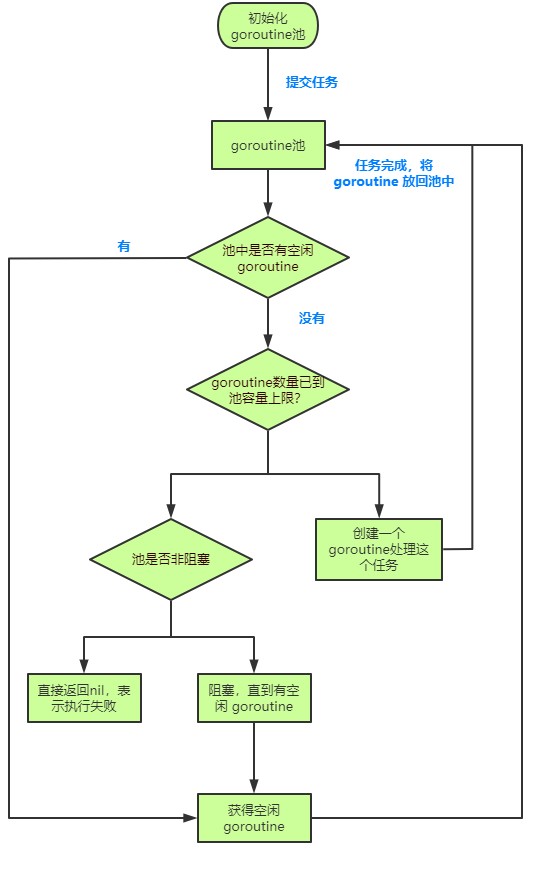
原理篇前置知识
详细请看以往文章 : sync 包锁与对象池
2.1.1 goWorker
type goWorker struct {
    pool *Pool
    task chan func()
    recycleTime time.Time
}
goWorker 就是我们协程池里的实例 , 简单理解为一个长时间运行而不回收的协程,用于反复处理用户提交的异步任务
- pool:goWorker 所属的协程池;
- task:goWorker 用于接收异步任务包的管道;
- recycleTime:goWorker 回收到协程池的时间.
type Pool struct {
    capacity int32
    running int32
    lock sync.Locker
    workers workerArray
    state int32
    cond *sync.Cond
    workerCache sync.Pool
    waiting int32
    heartbeatDone int32
    stopHeartbeat context.CancelFunc
    options *Options
}
- capacity:池子的容量
- running:出于运行中的协程数量
- lock:自制的自旋锁,保证取 goWorker 时并发安全
- workers:goWorker 列表,即“真正意义上的协程池”
- state:池子状态标识,0-打开;1-关闭
- cond:并发协调器,用于阻塞模式下,挂起和唤醒等待资源的协程
- waiting:标识出于等待状态的协程数量;
- heartbeatDone:标识回收协程是否关闭;
- stopHeartbeat:用于关闭回收协程的控制器函数;
- options:一些定制化的配置.
- workerCache:存放 goWorker 的对象池,用于缓存释放的 goworker 资源用于复用. 对象池需要区别于协程池,协程池中的
goWorker 仍存活,进入对象池的 goWorker 逻辑意义已经销毁;
goWorker 仍存活,进入对象池的 goWorker 逻辑意义已经销毁;
2.1.3 workerArray
type workerArray interface {
    len() int
    isEmpty() bool
    insert(worker *goWorker) error
    detach() *goWorker
    retrieveExpiry(duration time.Duration) []*goWorker
    reset()
}
该 interface 主要定义了作为数据集合的几个通用 api,以及用于回收过期 goWorker 的 api.
- insert 插入一个
goWorker - detach 取出一个
goWorker - retrieveExpiry 获取池中空闲时间超过 duration 的 已经过期的
goWorker集合 ,其中goWorker的回收时间与入栈先后顺序相关,因此可以借助binarySearch方法基于二分法快速获取到目标集合.
2.2.1 NewPool 创建协程池
func NewPool(size int, options ...Option) (*Pool, error) {
    // 读取用户配置,做一些前置校验,默认值赋值等前处理动作...
    opts := loadOptions(options...)

	// 构造好 Pool 数据结构;
    p := &Pool{
        capacity: int32(size),
        lock:     internal.NewSpinLock(),
        options:  opts,
    }
    // 构造对象池
    p.workerCache.New = func() interface{} {
        return &goWorker{
            pool: p,
            task: make(chan func(), workerChanCap),
        }
    }

   // 构造好 goWorker 对象池 workerCache,声明好工厂函数;
    p.workers = newWorkerArray(stackType, 0)

  //  golang 标准库提供的并发协调器,用于实现指定条件下阻塞和唤醒协程的操作.
    p.cond = sync.NewCond(p.lock)

 // 异步启动 goWorker 过期销毁协程.
    var ctx context.Context
    ctx, p.stopHeartbeat = context.WithCancel(context.Background())
    go p.purgePeriodically(ctx)
    return p, nil
}
2.2.2 pool.Submit 提交任务
func (p *Pool) Submit(task func()) error {

	// 从 Pool 中取出一个可用的 goWorker;
    var w *goWorker
    if w = p.retrieveWorker(); w == nil {
        return ErrPoolOverload
    }

	// 将用户提交的任务包添加到 goWorker 的 channel 中.
    w.task <- task
    return nil
}
取出goWorker 的实现:
func (p *Pool) retrieveWorker() (w *goWorker) {
    // 声明了一个构造 goWorker 的函数 spawnWorker 用于兜底,从对象池 workerCache 中获取 goWorker;
    spawnWorker := func() {
        w = p.workerCache.Get().(*goWorker)
        w.run()
    }

    p.lock.Lock()

	// 尝试从池中取出一个空闲的 goWorker;
    w = p.workers.detach()
    if w != nil {
        p.lock.Unlock()

    // 倘若池子容量未超过上限, 从对象池中取出一个 goWorker
    } else if capacity := p.Cap(); capacity == -1 || capacity > p.Running() {
        p.lock.Unlock()
        spawnWorker()
    } else {

	  // 倘若池子容量超限,且池子为非阻塞模式,直接抛回错误;
        if p.options.Nonblocking {
            p.lock.Unlock()
            return
        }

	// 倘若池子容量超限,且池子为阻塞模式,则基于并发协调器 cond 挂起等待有空闲 worker;
    retry:
      // 若阻塞任务已达最大限制,也直接返回;
        if p.options.MaxBlockingTasks != 0 && p.Waiting() >= p.options.MaxBlockingTasks {
            p.lock.Unlock()
            return
        }

		// 增加等待数并使用 cond 条件变量挂起当前协程;
        p.addWaiting(1)
        p.cond.Wait() // block and wait for an available worker
        p.addWaiting(-1)

	 // 被唤醒后(可能是因为 scavenger 清理协程),判断是否还有运行中的 worker;
        var nw int
        if nw = p.Running(); nw == 0 { // awakened by the scavenger
            p.lock.Unlock()
            spawnWorker()
            return
        }

      // 再次尝试重新获取一个空闲 worker;
        if w = p.workers.detach(); w == nil {
            if nw < p.Cap() {
                p.lock.Unlock()
                spawnWorker()
                return
            }
            goto retry
        }
       // 获取到了可用 worker,解锁并返回;
        p.lock.Unlock()
    }
    return
}
2.2.3 goWorker 运行
func (w *goWorker) run() {
    w.pool.addRunning(1)
    go func() {
        defer func() {
            w.pool.addRunning(-1)
            w.pool.workerCache.Put(w)
            if p := recover(); p != nil {
                // panic 后处理
            }
            w.pool.cond.Signal()
        }()

        for f := range w.task {
            if f == nil {
                return
            }
            f()
            if ok := w.pool.revertWorker(w); !ok {
                return
            }
        }
    }()
- 循环 + 阻塞等待,直到获取到用户提交的异步任务包 task 并执行;
- 执行完成 task 后,会将自己交还给协程池;
- 倘若回归协程池失败,或者用户提交了一个空的任务包,则该 goWorker 会被销毁,销毁方式是将自身放回协程池的对象池 workerCache. 并且会调用协调器 cond 唤醒一个阻塞等待的协程.
到此这篇关于Go语言ants协程池的具体使用的文章就介绍到这了,更多相关Go语言ants协程池内容请搜索风君子博客以前的文章或继续浏览下面的相关文章希望大家以后多多支持风君子博客!
您可能感兴趣的文章:
- golang中ants协程池使用和实现逻辑